
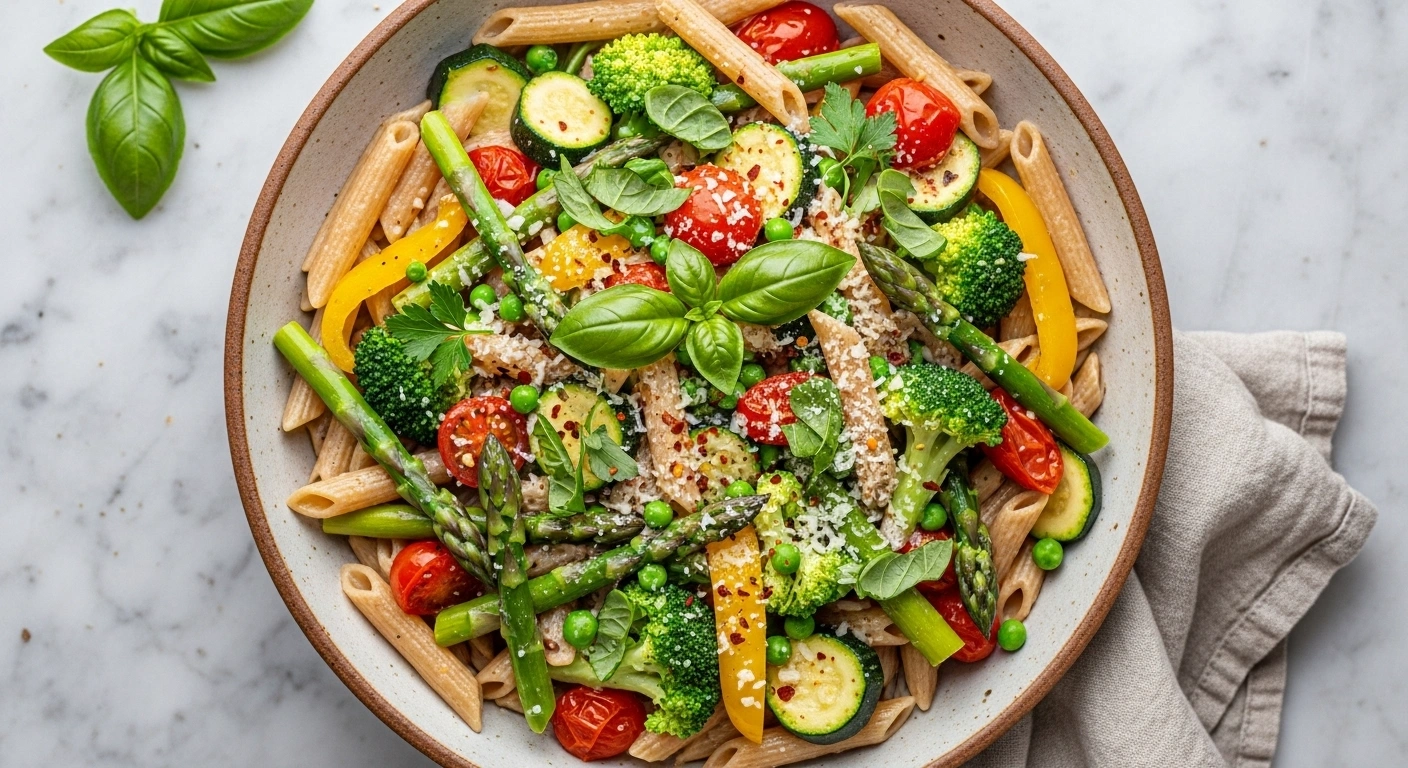
When I think of the ultimate celebration of spring, I think of a vibrant pasta primavera. There is just something so life-giving about those first few days of warm weather. Last March, my garden finally started showing signs of life. I had a handful of early peas and a few stalks of asparagus that were begging to be used.
I brought them into the kitchen, tossed them with some linguine and a light, lemony sauce, and served it on the patio. My youngest, who usually picks “green things” out of his food, actually asked for seconds. That is the magic of this dish. It makes eating your vegetables feel like a treat rather than a chore.
If you are looking for more ways to use up your garden harvest, you should definitely check out my ground beef zucchini boats. They are another family favorite that puts vegetables front and center.
This vegetable pasta recipe is all about balance. It’s light enough for a warm evening but hearty enough to keep everyone full. Let’s dive into how to make this garden-fresh classic!
Table of Contents
Why You’ll Love This Recipe
Finding vegetarian pasta dishes that everyone actually enjoys can be a challenge. This one hits all the right notes.
Here is why this will become a staple in your home:
- Fast and efficient. It is a true 30-minute vegetable pasta from start to finish.
- Highly customizable. You can use whatever seasonal vegetables are sitting in your crisper drawer.
- Light yet creamy. The pasta primavera sauce uses a secret splash of pasta water and parmesan to create a silky coating without heavy cream.
- Vibrant and beautiful. It looks like a rainbow on a plate, which is great for dinner parties.
- Budget-friendly. It relies on simple pantry staples and fresh produce.
Ingredients for Healthy Pasta Primavera
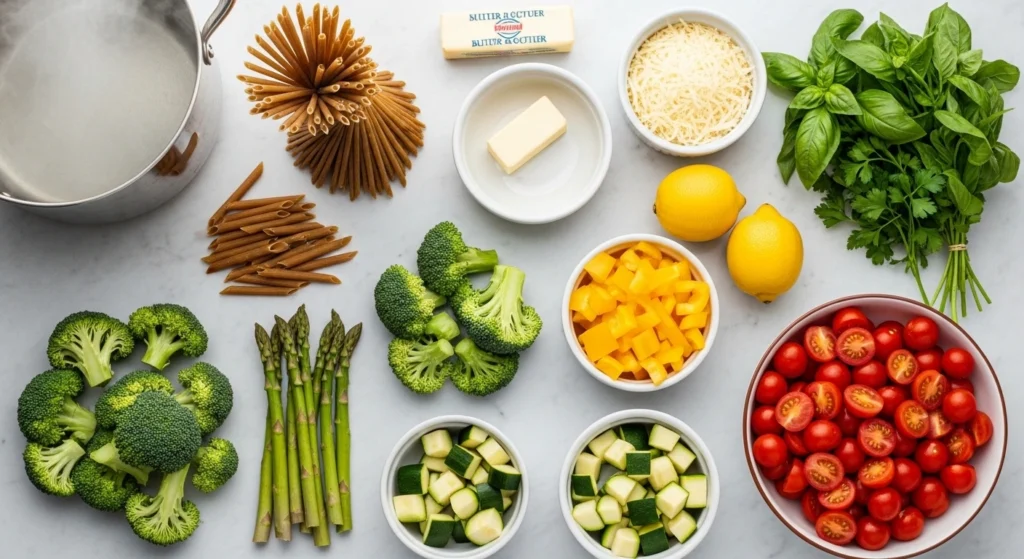
The key to a successful spring vegetable pasta is using fresh, high-quality ingredients. Here is what you will need:
The Pasta I prefer long noodles like linguine or fettuccine, but penne or farfalle (bowtie) work wonderfully too. The bowties are especially great for capturing bits of vegetables in every bite.
The Vegetables A classic mix includes carrots, bell peppers, broccoli, zucchini, and yellow squash. Don’t forget the frozen peas! They add a pop of sweetness.
The Aromatics Fresh garlic and shallots are non-negotiable. They provide the flavor base that makes the vegetables shine.
The Sauce Ingredients You’ll need extra virgin olive oil, a little butter, fresh lemon juice, and plenty of freshly grated Parmesan cheese.
Fresh Herbs Basil and parsley at the very end bring everything to life. Use fresh herbs only—dried just won’t give you that “spring” feeling.
Step-by-Step Instructions
Follow these steps to ensure your easy pasta primavera recipe comes out perfectly every single time.
1. Boil the Pasta Bring a large pot of salted water to a boil. Cook your pasta according to the package directions until it is just al dente.
Important: Before you drain the pasta, scoop out about 1 cup of the starchy pasta water. This is the secret to a glossy sauce!
2. Sauté the Hearty Veggies While the pasta cooks, heat olive oil in a large skillet over medium heat. Add your carrots and broccoli first, as they take the longest to soften. Cook for about 3-4 minutes.
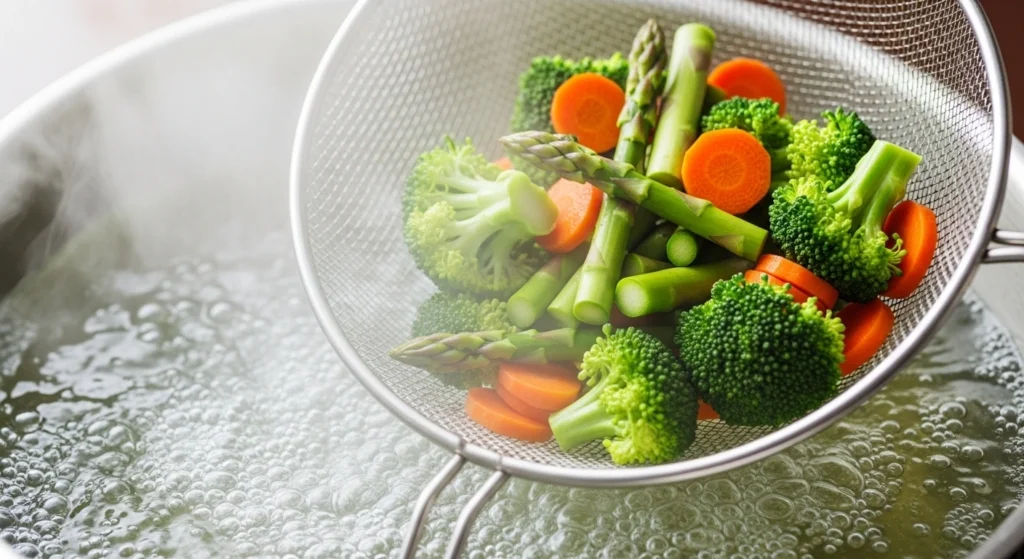
3. Add the Soft Veggies and Aromatics Add the bell peppers, zucchini, and yellow squash. Stir in the sliced shallots and minced garlic. Sauté for another 3-5 minutes until the vegetables are tender-crisp but still brightly colored.
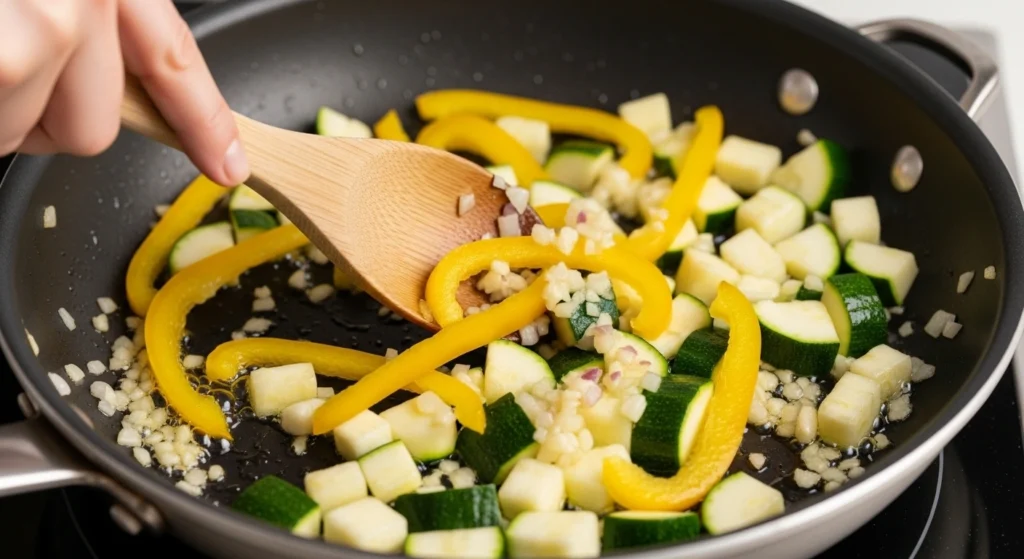
4. The Flavor Burst Stir in the frozen peas and halved cherry tomatoes. These only need a minute or two to warm through. Season everything generously with salt, pepper, and a pinch of red pepper flakes if you like a little heat.
5. Emulsify the Sauce Add the cooked pasta directly into the skillet with the vegetables. Pour in 1/2 cup of that reserved pasta water, the lemon juice, a tablespoon of butter, and the Parmesan cheese.
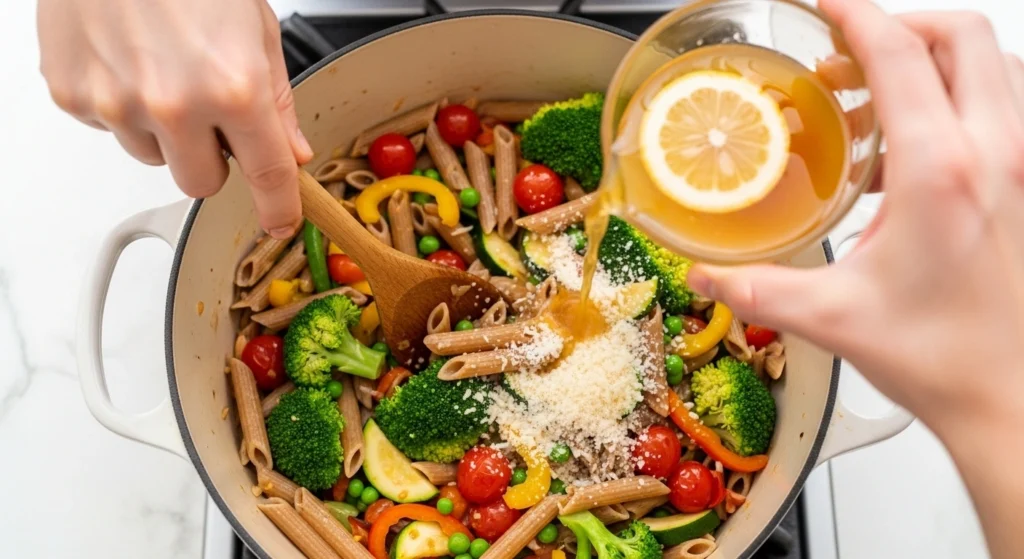
6. Toss and Serve Toss everything together over low heat. The water and cheese will meld together to create a light, creamy pasta primavera sauce. If it looks dry, add a splash more pasta water. Fold in your fresh herbs and serve immediately.
Pro Tips for Perfect Results
- Don’t overcook the vegetables. You want them to have a slight “snap” or crunch. Mushy vegetables are the enemy of a good primavera.
- Salt your pasta water. It should taste like the sea! This is your only chance to season the pasta itself.
- Use a large skillet. You need plenty of room to toss the pasta with the vegetables without everything spilling over the sides.
- Balance the acid. If the dish feels “flat,” add an extra squeeze of lemon juice right before serving. It brightens all the vegetable flavors.
Common Mistakes to Avoid
- Drowning it in cream. Many restaurants use heavy cream, but an authentic healthy pasta primavera is meant to be light. Let the vegetable juices and pasta water do the work.
- Adding garlic too early. Garlic burns quickly and becomes bitter. Always add it after your harder vegetables have already softened.
- Using pre-shredded cheese. The stuff in the green can or the pre-shredded bags contains cellulose (wood pulp) which prevents it from melting smoothly. Grate your own Parmesan for the best texture.
Serving Ideas
This dish is a complete meal on its own, but you can certainly dress it up.
A side of crusty garlic bread is perfect for soaking up any leftover sauce at the bottom of the bowl. If you want a light side, a simple arugula salad with a balsamic glaze balances the richness of the Parmesan.
If you’re looking for a refreshing drink to serve alongside this, my homemade strawberry lemonade is a fantastic non-alcoholic option that keeps the spring theme going!
Storage & Make-Ahead Tips
How to Store: Keep leftovers in an airtight container in the refrigerator for up to 3 days.
How to Reheat: Pasta tends to soak up moisture as it sits. When reheating on the stove or in the microwave, add a tiny splash of water or broth to loosen the sauce and bring back that creamy texture.
Make-Ahead: You can chop all your vegetables up to 24 hours in advance. Store them in a container or Ziploc bag so that when you’re ready to cook, the meal comes together in just 15 minutes.
What is the sauce made of in pasta primavera?
While some versions use a heavy cream sauce, this recipe uses a lighter, more authentic method. The sauce is created by emulsifying high-quality olive oil, a little butter, fresh lemon juice, and starchy pasta water with freshly grated Parmesan cheese. This coats the noodles perfectly without being heavy.
What are the best vegetables to use in pasta primavera?
The beauty of this vegetable pasta recipe is its flexibility. Classic choices include broccoli, carrots, zucchini, yellow squash, bell peppers, peas, and asparagus. You can truly use whatever you have on hand—cherry tomatoes and snap peas are also wonderful additions.
What protein goes well with pasta primavera?
If you want to add meat, grilled chicken breast or sautéed shrimp are the most popular choices. For a vegetarian protein boost, try adding a can of rinsed cannellini beans or some toasted pine nuts.
Can you eat pasta primavera cold the next day?
Yes! Because it is olive-oil based rather than cream-based, it actually makes a fantastic cold pasta salad the next day. Just give it a fresh squeeze of lemon and a drizzle of olive oil before eating.
Can I make this gluten-free?
Absolutely. Simply swap the traditional linguine for your favorite gluten-free pasta brand. Chickpea or brown rice pastas work especially well with these flavors.
Final Thoughts
This pasta primavera is truly the queen of spring dinners. It’s vibrant, nourishing, and fast enough for any busy weeknight. It reminds us that simple, fresh ingredients are often the most delicious.
I would love to know which vegetables you decided to use in your version! Please leave a comment below and rate the recipe—it helps our community so much.
Pinterest Tip: Be sure to pin the image below to your “Healthy Dinners” board so you can find it next time your garden is overflowing!
For more easy, family-friendly recipes, don’t forget to sign up for the EndRecipes newsletter. Happy cooking!
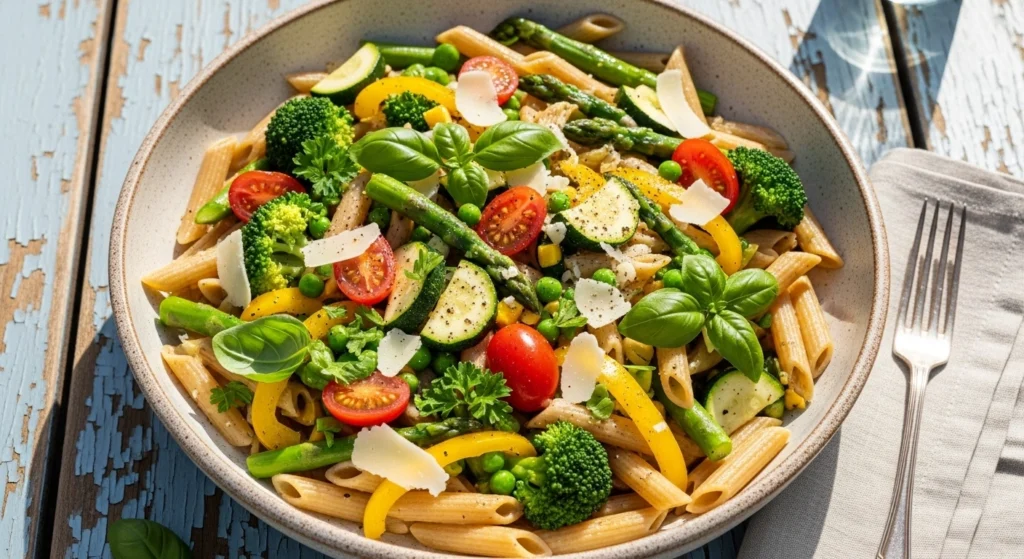
The Best Pasta Primavera
A light, vibrant, and healthy pasta dish loaded with seasonal spring vegetables and a zesty lemon-parmesan sauce.
- Prep Time: 15 minutes
- Cook Time: 15 minutes
- Total Time: 30 minutes
- Yield: 4 serving
- Category: Dinner, Lunch
Ingredients
-
12 oz linguine or penne pasta
-
2 tbsp olive oil
-
1 tbsp butter
-
2 cups broccoli florets
-
2 medium carrots, sliced into thin coins
-
1 yellow bell pepper, sliced
-
1 zucchini, halved and sliced
-
1 cup frozen peas
-
1 cup cherry tomatoes, halved
-
3 cloves garlic, minced
-
1 small shallot, thinly sliced
-
1/2 cup freshly grated Parmesan cheese
-
2 tbsp fresh lemon juice
-
1/2 cup fresh basil, torn
-
Salt and red pepper flakes to taste
Instructions
-
Cook Pasta: Boil pasta in salted water until al dente. Reserve 1 cup of pasta water, then drain.
-
Sauté Veggies: In a large skillet, heat olive oil. Sauté carrots and broccoli for 3-4 mins.
-
Add Soft Veggies: Add peppers, zucchini, shallots, and garlic. Cook for 4 mins until tender-crisp.
-
Toss: Add tomatoes and peas for 1 min. Add cooked pasta to the skillet.
-
Sauce: Stir in butter, lemon juice, Parmesan, and 1/2 cup pasta water. Toss until creamy.
-
Garnish: Top with fresh basil and extra cheese. Serve warm!
Notes
-
Storage: Store in an airtight container for up to 3 days.
-
Pro Tip: If the pasta feels dry when reheating, add a splash of water or broth to loosen the sauce.
-
Protein Boost: This pairs beautifully with grilled chicken or sautéed shrimp.
One Comment
Comments are closed.